A pool leak is easy to dismiss. Water levels drop gradually, you top up, and life goes on — until the water bill arrives, or worse, you find water damage in the surrounding structure. In Singapore, where pools run year-round and evaporation is already a factor, a slow leak can go undetected for months.
Here’s how to tell whether your pool is leaking, where leaks typically occur, and what professional leak detection involves.
Is It a Leak or Just Evaporation?
Singapore’s heat means pool evaporation is real. A typical uncovered residential pool loses 3–7mm of water per day through evaporation alone, more in direct sun.
The bucket test is the standard first check:
- Fill a bucket with pool water and set it on a pool step, submerged to the same depth as the pool surface
- Mark the water level in both the bucket and the pool
- Leave for 24 hours without running the pump
- Compare the drop
If the pool drops more than the bucket, you have a leak. If they drop equally, you have evaporation.
Signs of a Pool Leak
- Water level drops more than 10mm per day
- Wet or soggy ground around the pool, pump, or equipment pad
- Algae blooms that return quickly after treatment — diluted chemicals from water loss cause imbalance
- Increased chemical consumption without explanation
- Cracks in the pool shell or visible gaps at fittings
- Air bubbles returning from the jets — a sign of an air leak on the suction side
Where Pool Leaks Typically Occur
Shell Cracks
Hairline cracks in a concrete or fibreglass shell are the most common source of structural leaks. They develop from ground movement, thermal expansion, or age-related stress. Shell cracks are not always visible — many are below the waterline and only found through pressure testing or dye testing.
Plumbing Leaks
Return lines, suction lines, and pipe joints underground are a frequent source of leaks that are invisible from the surface. Plumbing leaks are typically found using pressure testing — each line is isolated and pressurised to identify which section is losing pressure.
Fitting and Skimmer Leaks
Where fittings pass through the pool wall — skimmer throats, return jets, main drain covers — the sealant and gaskets deteriorate over time. A leaking skimmer face plate is one of the most common and most overlooked sources of water loss.
Equipment Pad Leaks
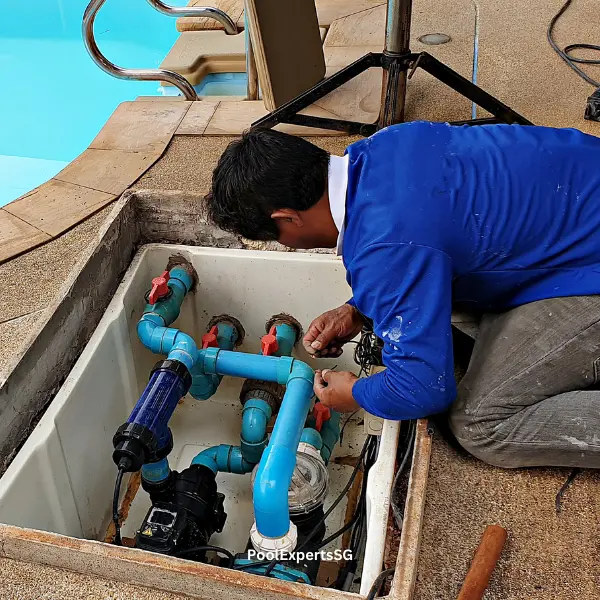
Pump seals, valve unions, and filter O-rings can all develop slow leaks at the equipment pad. These are usually visible as drips or wet ground around the pump pit, and are among the easiest for Pool Experts SG to fix — typically resolved in a single visit.
Professional Leak Detection
When the bucket test confirms a leak but the source isn’t obvious, professional detection uses several methods:
Dye testing — A small amount of dye is introduced near suspected crack locations or fittings. Water movement draws the dye toward the leak point, making it visible. Non-destructive and accurate for shell and fitting leaks.
Pressure testing — Each plumbing line is isolated and pressurised with air or water. A line that won’t hold pressure has a leak. The test identifies which line is at fault; further excavation locates the exact point.
Electronic leak detection — In larger pools or complex plumbing layouts, electronic listening equipment detects the acoustic signature of water escaping under pressure through soil.
Pool Experts SG diagnoses before quoting. Any contractor who quotes a leak repair without running a detection test first is guessing.
Repair Methods by Leak Type
| Leak Source | Repair Method |
|---|---|
| Hairline shell crack | Underwater epoxy injection or hydraulic cement patch |
| Structural shell crack | Drain, chip, reinforce, and resurface |
| Plumbing joint leak | Excavate, cut, and rejoin with new fittings |
| Skimmer face plate | Remove, reseal with pool-grade sealant, reinstall |
| Return jet fitting | Replace fitting and gasket |
| Pump seal | Replace mechanical seal — typically a half-day job |
The Cost of Ignoring a Leak
A pool losing 5mm per day is losing roughly 500–1,000 litres per week depending on pool size. Over a year:
- Water cost: significant, but recoverable
- Chemical cost: ongoing imbalance means constant dosing
- Structural cost: water in the ground beneath a pool softens soil and can cause progressive settlement and shell cracking
A leak that costs $300–$600 to fix today may cost $5,000–$15,000 in structural repair if left for a year.
Related: Pool Tile Problems in Singapore | Pool Filter Failure: Signs and Fixes
Stop Losing Water — and Money
A pool leak that goes undetected for months costs far more than the repair itself — in water, chemicals, and potential structural damage to your pool shell and surrounding ground. The sooner a leak is found and fixed, the lower the total cost.
Pool Experts SG provides professional leak detection and repair for residential and commercial pools across Singapore. We run systematic diagnostics — bucket testing, dye testing, and pressure testing — before recommending any repair, so you’re never paying to fix the wrong thing.
If you suspect your pool is leaking, contact Pool Experts SG to arrange a leak detection visit. We’ll identify the source and give you a clear repair plan and quote on the same visit.
FAQs
How accurate is the bucket test?
The bucket test is reliable if done correctly — same water temperature in the bucket, pump off, no rain during the 24-hour period. It confirms whether a leak exists but not where.
Can a pool leak be fixed without draining?
Yes, in many cases. Shell cracks can be repaired underwater using epoxy injection. Fitting leaks can often be addressed at the waterline without a full drain. Plumbing leaks and structural cracks typically require partial or full draining.
How long does leak detection take?
A full professional leak detection inspection — bucket test confirmation, dye testing, and pressure testing all plumbing lines — takes 2–4 hours. Results are usually conclusive on the same visit.
What if the leak can’t be found?
If standard methods don’t locate the source, electronic detection equipment or video inspection of underground pipes can be brought in. A reputable contractor will tell you honestly if further investigation is needed rather than guessing at repairs.
Does pool insurance cover leak repair in Singapore?
Standard home contents insurance typically does not cover pool leak repair. Some home structure policies cover water damage caused by a leak, but not the repair of the leak itself. Check your specific policy.